
Four years ago, when I first started presenting to the world as a woman, I met my friend Jamie for lunch in West L.A. As soon as we sat down, some children sitting at the table next to ours said they spotted two men who were “dressed weird.”
I knew they didn’t mean any harm, but my heart sank, since I was a newly out transgender woman who was trying her best to blend into society. Jamie noticed my discomfort and saw how I tightened up. She knew that I was wondering what else I could do to look better. “What had I done wrong?” I thought to myself. “Did I not wear enough makeup? Was my voice the tell? What did they pick up that gave me away?”
“Don’t worry, Natalie, so many transgender women get read in front of children,” she said. “They just have the knack to read us out and spot us. It must be their purity or innocence or something.” She was trying to console me.
There was a huge flurry of discussion and applause when Caitlyn Jenner announced her new name and the start of a new life with a glamorous spread on the cover of Vanity Fair. But not all of us get a spread in Vanity Fair and a prize-winning journalist to explain who we are. For most of us, it is hard to explain ourselves. The daily awkward moments are difficult to deal with, if only because they keep coming even after the “big reveal.” The most important change a transgender woman can make is to drop the protective armor she has been carrying around her whole life.
The first thing we are taught about gender is what we can’t be. Often, while I was growing up, I heard, “No, boys don’t wear dresses. No, boys can’t wear makeup. No, boys play with different toys than girls.” I knew my heart was feminine at the age of four, but society repeatedly told me that I couldn’t show the world the person I felt myself to be. If I did, I was going to get beat up—even though I was growing up in liberal Southern California. But after 30 years of modulating myself for those around me, I needed to start the transition to the person I’d always felt was inside, or walk through the rest of my life feeling dead.
To be transgender is to know deeply that the traditional gender roles assigned by the body parts you’re born with don’t fit, and that you have to move beyond what society typically thinks of as a “man” or a “woman.” To transition to the gender that we feel is inside of us, many transgender people choose to get surgery or take hormones, but many others do not. It’s more about living in the world as a particular gender. Medical history is irrelevant—and a private matter, as it is for all Americans.
For me, transitioning meant I had to peel off the years of socialization as a man, no longer hiding in transgender and gay bars, and inviting all 30 family members from both sides over for a meeting, where my parents went through the trouble of translating what I said into Chinese for those family members that didn’t comprehend English.
It meant walking into the living room for everyone to see me, and answering questions for four hours from people who were genuinely concerned about me and the struggles I had faced in solitude for three decades. It meant feeling like my old skin was ripped off as I walked in the world raw and tender, even though I had ample support from those who loved me the most. It meant accepting that, at any given moment, people could express disdain towards me—the very same disdain that I had feared so much when I was younger and prompted me to hide my trans nature for so long. It made changing wardrobes and applying makeup seem so easy.
Shortly after I began transitioning, a transgender friend and I were trying on outfits—she a cute halter-top, and I a strapless dress with a floral print—in the fitting room of Forever 21. We overheard an employee say, “Oh my God! Did you see those two? What are they trying to be? Did you see how ridiculous they looked?” He was giggling hysterically with another coworker.
For the majority of transgender women I know, no matter how attractive and passable she is, her trans-identity will reveal itself at some point. But it’s not even having our history out there that is the scariest thing. I recognize that some people, no matter what, are going to want to make me feel uncomfortable because I’m different from them. But the scary parts for me are the moments I am labeled merely as a “man in a dress,” treated as less than human, or erased as a freak.
Two years after that unpleasant rendezvous with Jamie, I was ecstatic to start my first job while presenting as a woman. Everyone at work—I’m an engineer—would meet the me that I had hidden for over three decades.
But accompanying my excitement came the fear that I would be read out as a transgender woman. So I did what most inexperienced transgender women do in their first few years of transition: I stiffened my spine and kept a heavy curtain up to conceal my past. I wanted desperately to box up my history and leave it in the dumpster.
So even though I identified as more of a “girl next door” and felt most comfortable wearing jeans and a simple top, I constantly tried to keep myself polished and camera-ready with Marciano dresses and Michael Kors heels. Not only was I exhausted by trying to hold up this 50-ton shield of defensive armor, I was also distant.
I quickly realized my armor came with a huge cost. My friendships lacked emotional weight. To hide that I was a transgender woman, I felt I had to edit out snippets of my life, such as the fact that my ex-fiancé was a beautiful Russian woman, or my last boyfriend was an aspiring professional dancer turned electrical engineer. I couldn’t go into details about my high school days or describe the queer activist rally I had attended over the weekend. And when asked by a coworker about the name of my former rock band in San Francisco, I lied because I was fearful he would discover through Google that it was a transgender band.
I had spent so much energy to come out as Natalie—only to find myself choosing to convince everyone that I was born female at birth with the childhood of a girl rather than owning my transgender identity. So I asked myself, “What is more important, a seamless concealment of my past, or more depth in my relationships with those women whom I see as friends? Did I really make this transition to merely walk into another closet?”
Then came an opportunity to change all that. I went shopping one Friday with one of the gals with whom I was closest to at work. After terrorizing our bank accounts for over four hours and swapping fashion tips, we went to an Indian restaurant for dinner. It was there that I told her about my transgender history and my journey into embracing my womanhood. When I finished, I was so nervous, I couldn’t look at her.
Then I felt my hands being taken into hers. As I turned my head upwards to make eye contact, she thanked me for telling her, and told me she was grateful for the opportunity to deepen our friendship.
It’s now been four years since I transitioned and I am so much more comfortable with my transgender history that I can approach it as a “So what?” when I’m interacting with other people in public. It is the prose of my everyday life—not the poetry—that has made the difference.
All the work I put in to drop my defensiveness was affirmed recently. During a friendly gathering for lunch between two families, a 3-year-old named Stella observed me with curiosity as I played with my 4-year-old niece, Sasha. When Sasha felt shy about being around new people, she buried her head into my dress.
Stella blurted out, “Are you Sasha’s mom?” All the adults laughed at Stella’s innocent inquiry, but I felt as if Natalie had finally arrived. It wasn’t about putting on an outfit and makeup or getting my genitals reconfigured, but about the work I put in to stop being self-conscious and play with these kids in the way that let my feminine heart shine.
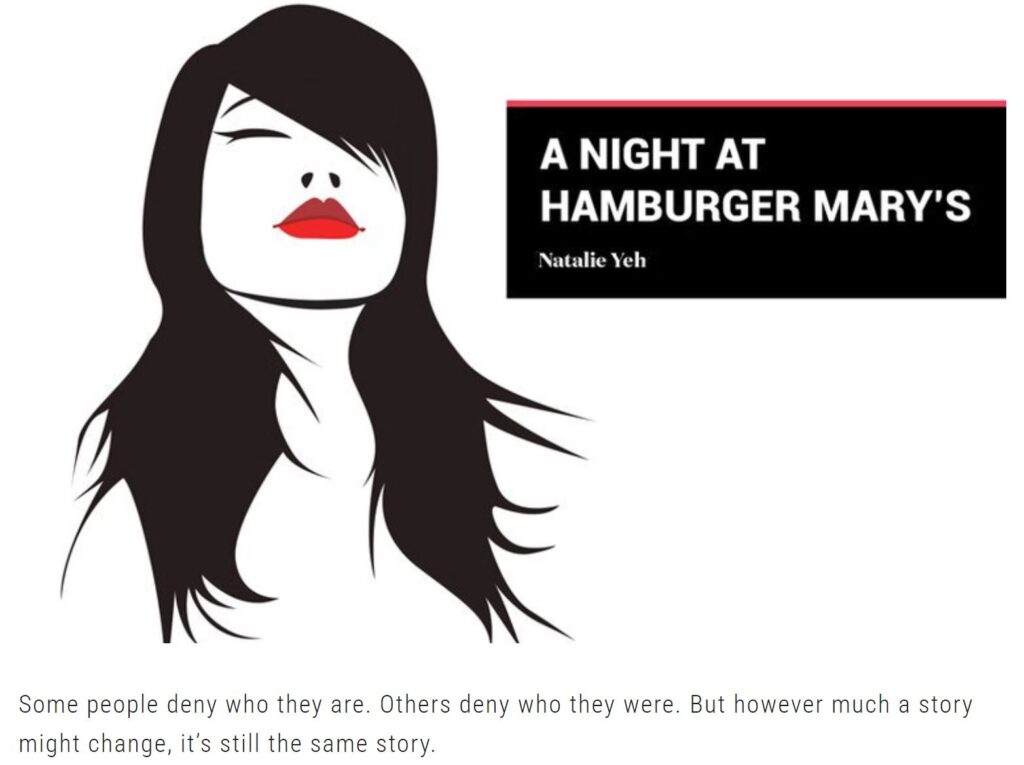
Published May 1, 2020
On the first Saturday of 2020, I attended Hamburger Mary’s monthly transgender-themed nightclub in Long Beach, California, run by the fabulous Jamie Jamieson. For me, this queer venue has been a safe haven for decades. It is a valuable incubator for queer people at all stages of their journeys to experiment and find their authenticity.
Upon entry, men and women were handed a ticket — either blue or pink, respectively. At midnight, Jamie was scheduled to randomly draw one ticket of each color, and the two winners would both walk home with $50. It was also standard protocol for her to take pictures with the lucky patrons, and the photos would often wind up on Jamie’s website, “T-Girl Nights in Los Angeles”.
As I looked around for my friend, a gentleman approached me. He wasted no time progressing from “You’re the sexiest girl here”, to touching my body. I urged him to slow down and share a bit about himself, emphasizing how important emotional connection was in conjunction with physical heat. He kept saying things like “I want to know what you do for work”, “I want to know what foods you like so I can cook for you”, “I want to make you my girlfriend”, and “I want to go on road trips with you.” For all his forwardness, he did seem to make a real effort to connect, and by the time the music stopped and the dance floor lit up for Jamie’s midnight raffle drawing, I found my defenses dissolved, his arms around my waist and our lips entwined.
The winning ticket for the girls’ raffle was called first. Sadly, it wasn’t mine, so I tossed my ticket aside. Next up were blue tickets. Jamie called out numbers, and when the last digit was read, the man whose arms were around me bulged his eyes. He swung the ticket in my direction. He had won.
“Congrats!” I said enthusiastically. “Go up there and get your fifty dollars!”
But he hesitated, did an Elvis shuffle, made like he was going, and then froze. It was then I knew he didn’t want to be outed as someone who dated women born with penises.
In my needier days, I would have overlooked his act of self-revelation. He was handsome, a good kisser, smelled good, and talked a smooth game. But I knew I could no longer consider him a potential partner because he wouldn’t confront the shame he felt surrounding his romantic attraction towards a transgender woman. And as the poet Maya Angelou said, “When someone shows you who they are, believe them.”
* * * *
Queer people are all too familiar with hiding identities. We understand the costs and tradeoffs of claiming ourselves in ways that defy social norms. But one of the hardest things about being queer is the conflict between claim and substantiation. The prevailing attitude currently seems to be that whatever people claim as their authentic identity must be respected. Yet many often hesitate to substantiate their claims. Instead, they choose to express their inner self only intermittently, presumably because they don’t like the costs associated with being visibly queer.
The intricacies surrounding transgender identities are especially instructive. Most people are now well aware that gender is a social construct, which is layered onto sex much like race is layered onto class. In both cases, complexities emerge when we try to associate someone’s claimed identity to their history or biology: our biology may shape our physical body, but our history shapes how we come to understand ourselves.
For example, are transgender women who are born male but have a feminine heart and later claim womanhood in their adult years less authentic because they had a childhood and adolescence spent socialized as a boy prior to finding their true identity? Is there any good reason for pushback against claims of a person’s gender identity without valid substantiation of those claims?
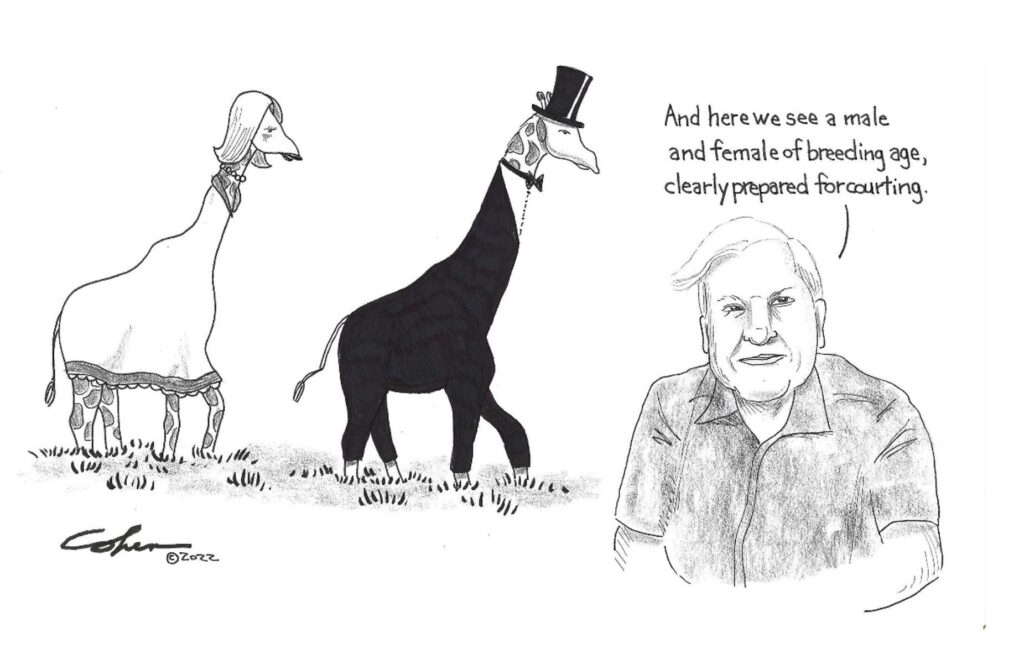
Gender is a social construct that has been passed down and modified through millennia of tribal and familial history. What made one an attractive woman in 1720 is not exactly the same in 2020. But since sex is not the same as gender (we can tell which giraffe is biologically male or female, but not which giraffe cares about symbolic representations of gender because they don’t wear clothing or accessories, use language, or make other such recognizable choices), it becomes clear that gendered symbols help construct the language we use to describe where we feel our hearts and spirits fall within the spectrum of human identities — a spectrum that invokes different methods to communicate who we are on the inside using the choices we enact on the outside.
Claiming a distinction between gender and reproductive sex evokes a common knee-jerk reaction for many. The instant transgender people claim to be an identity seen as contrary to what society associates with their history and biology, it is immediately assumed that one of those claims must be a lie. For people who only know about the sex of a trans person, this assigned “truth” holds more weight than their life choices. This attitude is often reflected in the beliefs of some radical feminists, for example, who erroneously claim that only a woman born female can be an authentic woman.
True, there are crossdressers who only dress up a couple of times a year, insisting it is just a weekend hobby that has nothing to do with their gender identity, but on those occasions demand for the entire evening to be recognized as a woman and addressed with feminine pronouns. Personally, I find such queer identity claims (when there is little effort made to substantiate them) difficult to honor. When a person who was born male, who lives in the world as a man, insists they are a woman and that they know what it’s like to live as one because they’re in town as a crossdresser for the weekend, I find it far-fetched. Even so, I do see and respect their trans heart and the possibility of their eventual transition. But I find their assertions of temporary womanhood dubious because, at that particular junction, they are still not making the full-time choices of a woman and don’t understand the sacrifices that come with such an identity.
Then there are those individuals who have just recently transitioned and assert their newfound identities by proclaiming they are “finally themselves”. This, too, disturbs me because the statement implies that who they were prior to their transition is not a part of their identity. Regardless of one’s choices to embrace a new presentation, no transgender person can ever claim their past is not a part of the actual life they lived. Stepping away from our old identity does not mean it never existed. As author Madeline L’Engle said, “We are always all the ages we ever were”, to which fellow writer Kate Bornstein immediately added, “And all the genders!” We can never erase our history or cut out our past, even if we feel the need to conceal it in an effort to be perceived as a person who went through the normative gendering experiences of our current presentation.
Then there are some nonbinary people who hide behind normativity or fluctuate between gender expressions and identities, yet berate those who fail to use “they/them” pronouns with political policing. What troubles me about such practices is the notion of claiming through rejection. Can we really opt out of gender and not identify, or do we, at some point, have to be clear about who we are and what we will commit to? Is identity, or more specifically, transgender identity, just based on rejection, or does it involve some demand to know who we are rather than just who we are not? Is a person who is born male and presents as a man truly a woman just because they claim to be? Or do they have to make choices that are socially considered womanly? Every choice in this finite world has a cost, even the choice to try and duck the cost itself.
To me, our biology is less of a deterministic indicator of our identity than who we are on the inside. When someone talks to my biology rather than my heart — by choosing to see me, for example, as a guy in a dress rather than a transgender woman — I know it reveals more about their limitations than it does about me. But that concept doesn’t excuse us from having to claim something. It doesn’t allow us to identify with all the categories of gender while sacrificing nothing. We can’t, as a queer community, hold others to proper pronoun usage and political correctness while simultaneously shifting our fleeting identities to our advantage based on our circumstances.
Although all claims of identity require a process of emergence — from a teenager claiming they are no longer part of their family but now an individual, to people claiming their queerness — no emergent process is ever absolute. We can have transcendent identities yet still understand that we are always rooted in the various truths of our past and immutable traits.
I will always be a transgender woman who has a male body, who went through male puberty, with certain male-boned features that dominate my physical appearance. I have no delusions that I will ever be female biologically, because I am not. I also understand that I don’t always pass 100% of the time, and since I was socialized with boys at a young age, I know the monumental work it took to recondition and shift the way I take power in the world, where I learned to make the choices of a woman rather than those of a man. I know from experience that trying to flirt with men while passing as a born female is not only dangerous at times but inauthentic; that trying to pass all the time limits my ability to share all of my history, and that my feminine heart has more to do with my gender than how I choose to sculpt or reshape my body.
* * * *
On that first Saturday of 2020, as my night at Hamburger Mary’s began winding down, even though I knew the gentleman I connected with earlier that night was no longer interested in me, I stuck around to meet up with my friend. This friend had demonstrated an incredible act of courage when she came out and transitioned at our old place of work. Despite not having the typical Hollywood-esque body one would see on the cover of Vogue, she substantiated her claim every day at work despite the awkwardness and struggles of being a newly-out transgender woman. Since getting laid off, she had been struggling financially, to the point where she confided in me that she had considered venturing into selling sex on the streets.
“Go up there and get the fifty dollars”, I said to the gentleman next to me.
He insisted he didn’t care about the money.
“Well, then go up there and get it for the sake of my friend”, I whispered to him. Still, he remained frozen. And that is why I did not buy into his promises of pampering me as his girlfriend. Irrespective of his claims, his true identity had shown itself. He was not ready to substantiate his statements or overcome his shame surrounding his romantic attraction to a transgender woman. Someday, I hope he does. I hope he finds the courage to embrace himself and live an authentically queer life.
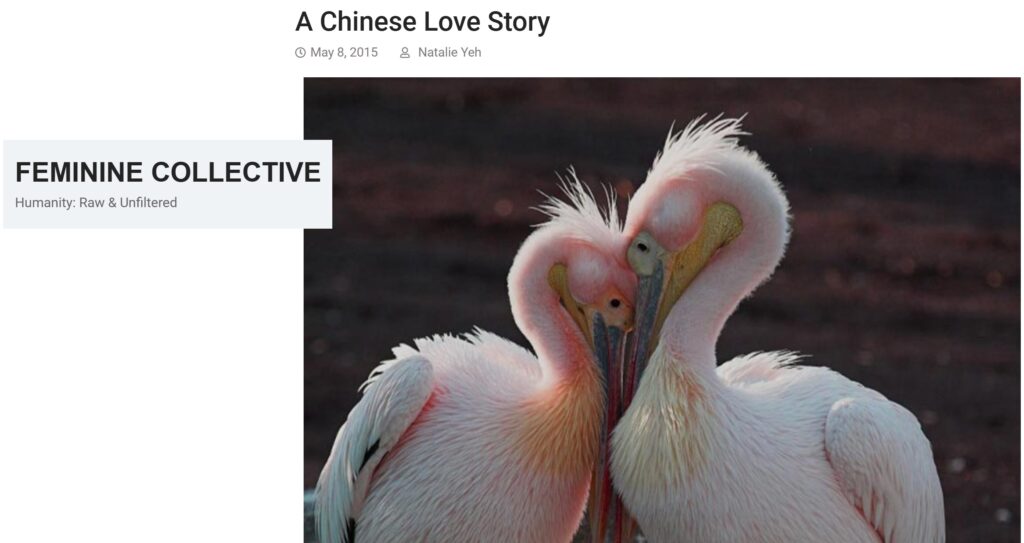
A Chinese Love Story
“Zhi Mei,” they call out, whenever they are lost. “Zhi Mei.” It is the call of friends and lovers, sharing excitement or trying to find each other in a crowd, “Zhi Mei.” It is the call of my parents.
“Beautiful Nectar” is the literal translation from Chinese, but the poetic meanings are deeper. “Zhi Mei” is the nourishing life water they share between them, the awesome sauce they give each other.
“They are wonderful folks,” people always say after meeting my parents. “They are truly special. Cherish them.”
The joy, the selflessness, and the devotion with which they share their time and energy, enthusiastically with others, for the greater good of the collective group is astounding. My father has just returned from his newest second career in China, teaching engineering, to help my mother support my sister-in-law through cancer. They started a non-profit Chinese school to help thousands of people in the South Bay of Los Angeles, letting others who needed to take the credit do so. I watched in awe as my parents showed their meekness and humility, letting themselves be of service.
For so many years, I was in so much pain, that I often forgot how truly special they are. Yet, their ability to love me, their transgender daughter, in an unconditional manner, is amazing. None of their behaviors wow me anymore; I just take it as commonplace with my parents.
I’m nonchalant through such wonder around me because I see an even deeper source of compromise, support, honesty, and love, bundled elegantly and shown daily towards one another: the source of my parents’ energy and their love towards one another is shiny.
After 40+ years of marriage, they still take walks together around the neighborhood. I’ve even caught them holding hands when they think no one is looking. It’s SO ADORABLE.
They dance without trying, effortlessly moving together without being in the same room. Their lives are intensely independent, yet are one in the same movement. I witness convergence interlaced with healthy independence like no other relationship. Naturally, it is easy to find their relationship so centered, balanced, and loving. It is authentic, kind, thoughtful, compassionate, and a thing of beauty.
Recently, my dad was getting ready to brush his teeth after coming out of the shower with only a towel wrapped around his lower body. My mom got a rubber band and began walking towards him. I happened to walk by their master bedroom and she quickly held her finger up to her lips and whispered “Shhhhh” to me, and I nodded and giggled. She snapped my dad right in the butt and they began a playful and humorous exchange.
I didn’t stay around after that. I walked out, smiling, letting them enjoy another moment together.
We often drink coconuts, and it’s common for all three of us to share the beautiful nectar when I visit their house. The other night, I opened one and drank my portion, and then proceeded to hand the rest to my parents. My mom was incredibly tired, and despite being on her feet all day and cooking several dishes for dinner, she took just a few sips and went over to my dad and gave him their share of the Zhi Mei.
The nurture, love, and fondness was breathtaking in that gesture. I could see the spark, the gift, the awesome sauce, still going strong after 40 years of marriage. They genuinely love each other so deeply and I am blessed to be a part of that love.
This love, this energy, has propelled them through so much, giving them the Zhi Mei, the mutual support and foundational energy which then cascaded down to me and my brother. Their Zhi Mei has supported us into blossoming as adults who are extremely grateful to have such awesome sauce parents.
I often doubt I will find someone spiritually aware and mature enough to love all of me for me. But, if there’s any consolation, I can honestly say it is very satisfying witnessing such a loving relationship that I know it not only exists, but that if I don’t find myself in a similar relationship in the future, I at least have had the privilege to see it for 30 years and now appreciate it on a whole new level of depth.
Sharing and being a part of their beautiful love has been a gift … my beautiful nectar, my awesome sauce.
Transcendent Growth Exchange
Five years ago, I arranged a meeting with twenty family members. I was to announce that I would begin to present to the world as a woman.
As soon as everyone saw me in person and realized that I was really going to transition my gender and begin living as a woman, my religious Aunt Holly and her husband Carl, both conservative Christians who ran a church together, were triggered by my coming out.
They criticized my choice as “sinful” and “immoral” and told me they would,
“pray for my soul.”
I was so offended by their comments that I lashed out at them by saying they were “too different from me, for us to ever get along again.” I swore I’d never show up to another holiday gathering at their house despite their culinary talents. I then went into my bedroom and sulked for several hours.
I remember blaming them for the hurtful event which transpired, blaming them for my emotional triggers, blaming their close-mindedness and dissimilar views towards the GLBT community as a source for their lack of compassion and understanding.
My rationalization to avoid my Aunt Holly and Uncle Carl solidified when they visited my parents for lunch two weeks later. I was newly out as a transgender woman, on hormones, and seeing a therapist while in the midst of healing 30 plus years of unprocessed emotions. I slept in late, wasn’t working at the time, and came downstairs to join them in the dining area a quarter past noon.
Upon hearing that I was living off my parents’ money and out late dancing at night, Aunt Holly said:
“You need to start serving other people, so you’ll have a purpose again. You should put all that energy towards others rather than on indulging yourself all the time. Getting a job and moving out would be good first steps for you to take.”
I told her she had no right to judge me, and that she didn’t know what I was going through or what she was talking about.
I was furious and ashamed that she believed I was a slacker, a loser who refused to grow up while milking my parents for all they were worth as I let my aerospace engineering degree go to waste by crying victim because I was queer. As long as I had my safety net by living with my parents, I could avoid anything that upset me in the world, and I was content with slacking, putting my own laziness and comfort as top priority.
“After that stunt, she pulled in front of the family when she called my transgender nature and feminine heart a sin, who did that religious bigot think she was to judge me?” I thought to myself.
There was a huge flurry of disagreement and worry after President-Elect Donald Trump won the election and picked Steve Bannon for the Chief Strategist position in the White House. The result: a rise in hate crimes against the Muslim and GLBT communities, increased outspokenness by the White Supremacist organizations, in addition to countless anti-Trump protests across blue states, with California even discussing a possibility of Cal-Exit.
A big cause for the rising tension and escalated violence in an ever politically divided nation lies in the erroneous fallacy that those whose belief structures differ from theirs, particularly in political and religious aspects, cannot get along with each other.
The first thing we are taught, and often what comes naturally as an initial response, is the concept that when others hurt us or trigger our unwanted feelings, that they are the ones to blame. While growing up, I often wanted any unpleasant interaction or stimulus to go away, such as an annoying classmate who differed in their opinions or views, usually by trying to convince them my way was the right way, the only way.
I wanted my life to return back to the moment before I was triggered. Before my mind was forced to think and see differing views, then what was inside the narratives already found in my own head. I wanted the ketchup to go back in the bottle, wanted the world to return to how it was moments before I saw something unexpected and new.
That is the same mentality which can reverse progress and diversity. The same mentality that drives the rhetoric of “making America great again” by turning back the rights of women to abortion, the rights of GLBT people to get married, and the rights of immigrants to stay in a country they’ve worked so hard to assimilate in.
Rarely was I told while growing up that listening to and embracing our own needed growth from personal triggers that arose, meant that I needed to abandon the desire for a quick fix of silencing others and instead go inward, on my own journey of healing and growth for a deeper understanding of myself.
Healing takes time.
It takes compassion and openness towards change and what’s different by letting go of the old and allowing the new to take its place.
Above all else, it takes patience.
For me, healing meant that when I calmed down from being triggered, I had the choice to investigate what caused Aunt Holly and Uncle Carl’s comments to bother me so much.
It meant choosing to let their comments spawn the growth I needed to empower myself rather than lashing out at them during every family gathering.
It meant letting go of my grudges and finding my sense of individuality and responsibility by being a contributor rather than a slacker.
It meant moving away from the victimization mode my ego had so thoroughly used against me and owning my feminine heart by living as my authentic self with pride and confidence.
It meant dropping my grudges and showing up at family events as my feminine self, showcasing my persistent truth not with force, but with grace and an open heart and to allow everyone time to embrace the changes I had undergone and to learn and heal on their own time in their own way.
A few months ago, on a work night, I needed a place to get ready for a cabaret show I was attending. My aunt’s house was located between my job and the theater; it would save me a trip home during rush hour traffic, and she generously offered me a space to doll up. When I walked out of the bathroom, she and Uncle Carl were standing in the hallway, and they said something I never thought I would have heard from them during my lifetime:
“You look so beautiful,” said Aunt Holly.
“You have blossomed into a mature and elegant woman,” added Uncle Carl.
I thanked them and gave them both a teary-eyed hug and headed out.
The reciprocation of our mutual growth and respect for different political beliefs and life views as a contrasting cast consisting of a queer, lesbian transgender woman and conservative Christian relatives was affirmed recently when my father announced that everyone would be going back to Taiwan to visit my grandma for her 90th birthday. But then the news came that Aunt Holly, grandma’s unspoken favorite out of her six children, had broken her kneecap and shattered her patella when she tripped on their garden hose. She was recovering at a hospital a few blocks from my work after a successful surgery in which implanted titanium screws put the five pieces of her kneecap back together.
Knowing how unappetizing hospital food was and how disappointed Aunt Holly must have been to know she was unable to attend the upcoming family event, I decided to ask if she would like me to bring her her favorite In-N-Out burger or some dessert. She declined food but welcomed a visit from me, so I did the second best thing I could think of: I brought pictures of my niece and nephew and played videos of the rowdy four and six-year-olds from my cell phone, bringing her to tears.
The beauty wasn’t just about the burger at the hospital or the compliment I received in their hallway.
It was about the work we both put in to understand our triggers and how we owned our differences.
Our continuous common humanity, the things that made us connect rather than divisive, strengthened and shined as we showed compassion and respect for our differences.
Sweet Boundaries
Auntie 13 was always the nicest (with 14 relatives on my mom’s side of the family, it was easy to refer to them by number) and often the most generous.
I recall when I was growing up that she would always give us candy upon each visit. Being raised in a household where my father was really strict about junk food consumption, my brother and I found ourselves in heaven.
“Isn’t Auntie 13 nice?” I gleamed, stuffing my face full of Kit Kat chocolate bars one day on the way home.
My brother and I could see my mom’s face in the corner of the rearview mirror. Her eyes rolled.
My brother and I got quiet.
We knew, even after only six short years on the planet, that the famous eye roll, called “sterile meatballs,” meant it was best to stay quiet. Just to clarify to those who aren’t familiar with Chinese slang, sterile meatballs, in Chinese Mandarin, came about as a metaphor by referring to how folks only see the white “sterile” parts of someone’s eyes, or “meatballs,” when they were frustrated.
I approached my mom from the backseat with caution and stuck my head over the upright armrest.
“How could candy be a bad thing?” said my naïve mind with an inner monologue.
“Your aunt has a real issue to please everyone, even when she can’t afford to.”
“You mean, she doesn’t have enough money to buy us candy but she does anyway?” asked my brother.
“Yes,” my mom said with an angry demeanor. “And her reckless spending puts a lot of pressure on your uncle to work longer hours.”
The candy didn’t taste as good as it did a couple moments ago.
I learned later on that Auntie 13 had poor control of her boundaries. She often let her inability to face her shame and her embarrassment of showing up empty handed when she saw guests and relatives to be the driving force in her actions, clouding her financial decisions.
There is a needy part in all of us, and like Auntie 13 so many years ago, I too have had enormous difficulty committing to my boundaries.
It has been a recurring theme, a lesson my Mother in the Sky seems to throw at me with recurring efficiency for the last 28 years.
Take, for instance, my uncle’s biggest frustration when I first started learning martial arts with him at seven years old, where my inability to commit to a punch or a block drove him crazy.
He would often catch me striking without conviction, in a half-hearted stance while trying to block too.
“Just what exactly are you doing?!?” He would ask me out of frustration.
“I want to be ready to block as quickly as possible after being open to being hit when I attack.” I would explain with self-assurance, expecting him to commend me for remembering the lesson that he preached about. When we strike, we were the most vulnerable to being hit ourselves.
He wasted no time bringing to light my lack of understanding of the lesson.
“But your stance is caught halfway between a punch and a block and not serving you at all,” he said with stern eye contact. Then without warning, he parried my weak punch and took me down to the floor.
When my million mile stare subsided as I regained air in my lungs, he spoke. “Commit to your decision,” he said with authority, hoping the lesson would stick in my head.
Real Life Practice
It’s been 28 years since that day of martial arts practice, and that same fear of being hit, now transposed to occasional forms of social anxiety and inner conflict, have caused me complications when deciding whether to stand up for myself or to have my emotions trampled by people.
That same insecurity and fear still lurk from my inner critic, and the source of pain reminds me I’ve been hurt before, and I’ve often chosen to bite my tongue and stick around in a social setting, despite the people being toxic, negative, judgmental, controlling, and even abusive towards me, sometimes turning me into emotional road kill.
During the emotional beat down, my stronger, inner voice, my authentic and confident self, often screams at me to stand up, to uphold my boundaries, but at times, to no avail because I chose to side with Needy Natalie.
Needy Natalie is the Natalie who clings to people, the one who isn’t sure of herself and is afraid of conflict. She is the Natalie who doesn’t commit due to fear of loss, fear of feeling lonely, so she does a half ass attempt at being a friend and getting ready to flee. So I had to ask myself. Was I willing to bend myself into unauthentic shapes in order to get a quick fix of desire that I was taught to crave from a young age? A craving that we were all taught to seek for that matter, to play up to the part of how others imagine us to be in order to extend the attention we receive a bit longer and to maintain the comfort others expect out of us? Or do I do what’s best and honest for me, even if it causes a bit of discomfort?
I know I can listen to and act out on behalf of Authentic Natalie: stable, centered, confident. I’ve done so numerous times by being mindful, and remembering the memories of how things played out when I did listen to my heart in past situations, reminding myself that I have had past successes in honoring myself. It hasn’t been easy employing this new practice. But when I do commit to my inner truth, the outcomes give me more self-esteem and satisfaction, in the long run. I may not have gotten the initial sensation of avoiding conflict during a situation, but I can live with the choice I made, knowing I chose the authentic path in my heart.
And that path, when aptly used in my journey, has been the sweetest candy of them all.
Being a Transgender Woman in the Real World
Transgender women can exist in peace as long as they stay within the confines of a computer, hidden in the hard drive of horny men who see us as a fantasy, a fetish, an object, a broken human being.
When transgender women leave the confines of societal shame and dare to take a step in the real world, people lose their minds, assigning self-appointed morality badges to police those who have faced stigma their whole lives and merely took a chance to be authentic in public spaces.
Those who police us are the ones who find our presence too queer, too controversial, too challenging to face, and hence we must be shut down, locked away, blocked off from normative gazes so we don’t upset the status quo. The limits of people’s perception of the universe ends at the boundaries of their understanding, and hence people who are queer, those who walk through the paper walls of social confines and challenge hetero-normative assumptions must be silenced, because, in order to maintain fairness, we have to be policed in the same fashion that they police themselves.
Why should we have all the fun of being free and being ourselves, feeling free to express who we are when they have chosen a life of emotional chastity?
At that instant, their insecurities become fuel to stoke the fire of hatred, rationalizing their misunderstandings and fear in the name of purity, the lord, the righteousness that has abandoned America. The compartments used to hide their desires for us during the evenings as they browse porn sites must stay intact, walling off any semblance of attraction they feel for us in the daytime.
Being an out and open transgender woman has its advantages, but we must face moments when those who spot our queerness decide to police us back into the closet.
I revealed some leg at work today, and was told to go home by HR because other women complained about the way I was dressed “too sexy.”
Strange, other women consistently dress sexy at my company, with a few even bragging about which VPs they slept with; yet, I was told to go home and change.
I know how lucky I am to have the physique given to me by my Mother in the Sky — slender, China doll skin, and a head full of my own hair with feminine features and high cheekbones — but our blessings are always our curse, and my curse is being labeled as a troublemaker: arousing men despite being clear about my transgender history and for choosing to present in the world as a woman because of my feminine heart.
Those who know about my transgender history, I’m very open about it, face a challenge. They can see me as attractive and admit that they are sexually queer themselves, or try to destroy the trigger that causes them cognitive dissonance by getting rid of my presence.
The latter, from my experience, has by far been the more popular and frequent choice at work, with all the little oblique actions and gossip that take place behind my back, at work and amongst old acquaintances who now see me as someone too dangerous and risky to be around and keep in their lives.
I refuse to box myself in and play small simply because other people are threatened by my unique individuality, and that makes for a very difficult amount of tension for me to deal with on a daily basis.
Transgender women can exist in peace as long as they stay within the confines of a computer, hidden in the hard drive of horny men who see us as a fantasy, a fetish, an object and broken human being.
And me? I refuse to deny the world of my gifts by staying in 2-D, because the last time I checked, I’m much more powerful in the real world, creating ripples of change by patiently and compassionately being my authentic self.
Human Deck
Our deck is the human deck we are dealt, and when we project fantasies and assumptions of transcendent perfection by comparing our lives to those of strangers we don’t even know, it can be dangerous.
This culture assumes celebrities have the life we want, casting them into a perfect role in our minds, into a fantasy life that is elusive for us “regular folks.” Nothing could be further from the truth, because they are human too, and humans are always going to be jagged and rough around the edges.
In the past, I had often rejected the deck I was dealt by my Mother in the Sky, wishing I was less queer and less challenging. I denied the gifts I was given and instead wished I were like other people, like the people I projected fantasies onto, assuming that if I were like them that my life would be so much better.
Even as recent as this past Labor Day weekend, I was guilty of casting assumptions onto total strangers when I saw a drop dead gorgeous black girl sitting at the bar, her giggles and seductive gestures turning her boyfriend on as they shared a deep conversation.
I immediately imagined her life as equal in caliber to Jada Pinkett Smith or Halle Berry, and that this couple would finish their drinks, make it home and kiss with wild passion and make love all night, with her body throbbing in unison with his loins as they both screamed in ecstasy. Her body raw and receptive in cuddles from his arms as they basked in the warm afterglow of his muscular torso with shared giggles and the joys of glistening skin.
I chalked the possibility of that powerful lovemaking up as a certainty for this beautiful black girl because she had a factory made pussy as a cisgender woman and I was issued a large clit in the form of a penis as a transgender woman. She was the favorite, she was the one who would always win in a battle of the sexes, and she had the perfect life while my life was shit. She would get married and live happily ever after, while I would die alone, a bitter spinster with resentful sentiments.
Then a groovy song came on over the speakers and interrupted my projection about this black woman whom I knew nothing about. Her boyfriend grabbed her and said “I like this song, let’s dance,” and proceeded to twirl her on the dance floor.
It was at that moment when I noticed her playful and seductive self-disappeared, replaced now by a million-mile stare. She had zoned out, almost as if she was putting up with him grinding her on his thigh as he showed her off to the crowd, waiting for the moment to be over so that she could get back to what she really wanted: emotional connection and a sense of feeling mirrored with intimate conversation at the bar.
It is common for men to trade giving emotional attention for sex, and women trade giving sex for emotional connection.
This couple had strong chemistry and sparks while sipping their drinks at the bar, their flirtatious energy obvious and radiant. But I assumed they had a perfect sex life, and on top of that assumption, I projected the conclusion that it was perfect solely because she was straight and cisgender while I was queer and transgender.
My life, so I thought, would be so much better if I were straight – if I was cisgender. My life would have been perfect had I been born female. I fell into the “if only” mode, and my ego used all the dirty tactics of 37 years to convince me that being transgender was something to reject, something to feel sick about, something to use to validate my shame.
The truth is, my jealousy of her being straight and seeing her with a guy, is easily reversed if I imagine myself with my lesbian friends at a queer bar or recall the countless times I was treated like a queen with gentlemen that appreciated my transgender history.
I never stopped to think about the positive aspects in my life, the flipside of my negative coin, instead focused on what I didn’t have, what I felt the world owed me.
I entered princess mode and that wasn’t attractive at all, forgetting about how queer women and men fawn over me and chose instead to blame my singlehood on being transgender rather than empowering myself by pointing out the blockages and obstacles I put in place to prevent myself from connecting and dating other people.
Our deck is the human deck we are dealt, and when we project fantasies and assumptions of transcendent perfection by comparing our lives to those of strangers we don’t even know, it can be dangerous.
I saw a Facebook post the other day about Brad Pitt and Angelina Jolie splitting up, and a friend said that she had now lost hope in her own possibility of finding lasting love because, in her mind, “if even a power couple eventually gets divorced,” how was her relationship to stand any chance?
It’s easy to proclaim and assume that other people’s failures are indicative of our likelihood of failure, but there is no causality or linkage except the fact that we projected a story about people we know very little to nothing about, onto our own powerful and potent life.
In the end, they may be celebrities, but their deck is the same as our deck: a human deck we were dealt, and when we project fantasies and assumptions of transcendent perfection by comparing our lives to those of strangers we don’t even know, it is dangerous.

Queer Fireball
I am a living fireball of queer energy, and as a result, I am a challenge to those who haven’t yet embraced their own queer identities, queer voices, queer individuality, and uniqueness.
Being a walking, living, breathing embodiment of political activism isn’t my intention, but it’s what I am cast as in the view of strangers who observe me. For those who are still afraid of stepping out of their own comfort zones, I can be quite challenging as I stir up their repressed desires and prod at the subconscious triggers that they think are tucked away safely, away from being able to spring up to bother them at a moment’s notice.
Fire has always intrigued people. We can’t help but stare at a campfire as we marvel at the small pockets of energy that it releases, the dried logs emitting stored sunlight that has been converted to organic matter through the conduit of life. Fire serves us in so many ways, as it keeps us warm, cooks our food, and casts light upon what we cannot otherwise see, as it drives out the darkness that so often frightens us when we are wrapped in the unknown, the mystery, the uncertainties of life.
The flipside to the coin of fire’s practical uses is its equal capacity to cause damage. As much as people have harnessed the use of fire throughout the millennia—to cast iron and shape tools, for example—our awareness that it is dangerous and can harm us is always on high alert. We know the crucible in which we operate fire’s uses serve as a barrier of safety in which we are granted the temporary ability to handle it.
My life aura being fire, I shine bright as I radiate into the world, a beacon that shimmers and wiggles with a drumbeat that strikes a delicate balance between performativity and authenticity. I open my flower petals to the world and offer my unique dance, and as some runaway, others are intrigued. The intrigued stick around and some are even bold enough to get close.
They are drawn by the brightness I generate as they come close, as each selects their respective distance away from me at which they are comfortable in continuing their gaze upon my twirls and drumbeats, my life cadences.
I have asked many in the audience whether they want to dance with me, to share the stage with me, to bask with me in a collective intimacy in which we exchange heat. But I have yet to find a partner who isn’t afraid to dance with me, who doesn’t try to contain me in a crucible that takes away the freedom for me to fan my flames.
I can see the trepidation in my audience’s eyes. They are afraid my flames will harm them, will burn away their defenses and rationalizations to reveal the truth that they know they must face, but aren’t ready yet.
They clam up and back away from me, and at those instances, I am reminded that I am a living fireball of queer energy. My flames are too hot, my heat too intense, my queerness too dialed up for anyone to feel comfortable long enough to finish a dance with me, let alone engage in one.
So they keep their distance, and just watch and clap as I continue my flaming twirls to their delight.
On occasion, a few bold audience members will engage me and try to approach the stage, but then once on stage, they put up immediate boundaries that serve to contain my flames. Upon doing so, my oxygen levels become depleted, and I begin to wither, unable to provide the light, the shimmer, the radiance that drew them to me in the first place. More often than not, they leave. Other times, I have had to tear down the walls used to confine me and find a new place to start my fire again. Hearts break, tears are shed, but my fire must burn on, my flames must continue to dance.
I am a living fireball of queer energy. I understand that.
But it takes a lot of fuel and presence of mind to keep the dance going, to keep the fire radiating to the crowd without any reciprocation. Unless someone mirrors my heat or joins me in my dance, I cannot sustain this by myself forever. I have started to believe that I will forever be flaunting my flames by myself, on stage in a solo act, hot but isolated, vibrant but alone.
I am a living fireball of queer energy.
I can’t wait for someone to join me as I fan my flames.
Casting Call: Humanizing Identity Needed
September 18, 2016 Natalie Yeh
Last year, when Jared Leto won an Oscar for portraying a transgender woman in the film Dallas Buyers Club, proponents of Hollywood and mainstream media praised the social awareness the film promoted, claiming it furthered understanding of transgender people and shed light on the struggles that people in the LGBT community face, all the while not seeming to care that a wedge was being further driven into an already divisive issue between the transgender community and mainstream entertainment regarding cisgender men — individuals who self-identify with the gender that corresponds to their sex at birth — playing roles portraying transgender women in cinema.
“I don’t think this much visibility for transgender people can be entirely bad, can it?” said my friend at an Oscar party I attended.
He meant to address the comments I had made in which I claimed there would be long-term repercussions and setbacks that the transgender community would immediately face with the national broadcast of Jared Leto clutching his Oscar with a fully bearded face, unquestionable as the man he claims to be in his daily life, with his gender identity accentuated by his white tuxedo.
“Right, how bad can it be for the transgender community that a person who portrayed the lead transgender character in Dallas Buyers Club had just won an Oscar for “Best Actor in a Leading Role?” I said.
There were tense tweets exchanged between Mark Ruffalo and Jen Richards when Matt Bomer was cast as a transgender sex worker in the feature film Anything, in which Ruffalo served as the executive producer and subsequently defended his choice of casting Bomer for the role. Jen Richards emphasized how it is time for films with transgender characters to cast transgender people so that their stories can be told with more accuracy, can humanize transgender people in a light that doesn’t further perpetuate the stereotype that a man can slap on a wig and makeup and be a transgender woman, that our transgender identities aren’t just a role to be played.
After all, no one in their right mind would think that since it was fine to cast a cisgender man to play a transgender woman’s role, then why not cast a man in any woman’s role, such as Sylvester Stallone for Meryl Streep’s role as Margaret Thatcher?
The truth is, there has always been a “Guy In A Dress Line,” where transgender women, no matter what they do to change their bodies or their choices, are still inevitably seen as men in dresses.
The “Guy In A Dress Line” serves as a cultural barrier, a real cultural line of defense for heteronormative cisgender men and women who otherwise would have no insulation for the assaults that would occur against their perception of what their expectations of transgender people should be in their minds. Even the transgender and gender-queer community struggle with this concept, protecting themselves from being branded by this cultural line by going through surgeries like Caitlyn Jenner did, or by rejecting gender altogether by pushing for a non-binary movement to dissolve gender constructs entirely with gender neutral pronouns and presentations.
It has always been easier for general society to request transgender people — especially transgender women — to reveal what’s under their kimono by asking such privately invasive questions as whether we’ve had our genitals reconfigured or when we started wearing heels, makeup, and pantyhose, rather than engage in real conversation about who we are as individuals because, well, it’s just easier that way. Easier for the directors and casting agents to give the audience what they believe will be titillating without doing much research into humanizing us.
Shortly after Ruffalo came out to defend his decision to cast Bomer in Anything, because Jen Richards who auditioned for the role was turned down for not, ironically, being “trans enough,” Michelle Rodriguez came out to defend her role in an upcoming film Re(assignment), where she plays a male hitman who undergoes forced sex-reassignment surgery by a rogue doctor and is now out for revenge as a woman assassin.
The entire concept of Re(assignment) was offensive to the transgender community not only because the role was given yet again to a cisgender woman, but because the notion of being transgender was once again portrayed as a performance rather than authentic identity, as if gender transition is accepted and completed for any man if they simply go through a few snips under the knife. It was also highly offensive because it portrays genital reconfiguration surgery as a punishment for Rodriguez’s character, which is what prompts her to seek revenge.
Rodriguez’s character gives the equivalent slap in the face to the transgender community as would an actor of Chinese descent who gets brown paint splashed on his body and then comes out the other side speaking perfect Spanish and blending in flawlessly with the Mexican community without missing a beat.
Even more insidious than how these Hollywood roles perpetuate the harmful notions about the transgender community is the fact that none of the real struggles and learning curves that actual transgender people go through to own their newfound identities are shown.
Instead, these transgender characters, often played by cisgender actors and actresses, merely need to go through a changing room to come out as transitioned on the other side.
If it were really as simple as changing our outer masks to solve transitioning genders for transgender people, transgenderism would no longer be a social hot button because external changes and socialization would really cure the desire for a transgender person to transition.
The real tragedy in these types of misunderstanding towards the transgender community is how transgender people are stripped of the work they put in to re-gender themselves and take power in the world in their new gender roles, which takes an enormous amount of emotional intelligence and re-programming to undo and let go of the damage we accumulated from internalized shame while living in the socialized gender roles we were assigned at birth.
The transphobia society feels is the same phobia we had internalized ourselves prior to self-acceptance, all of which was born from the same source of fear: an uneducated society on what it means to be transgender.
Outside of the genital reconfiguration surgery, which most elect not to even have for personal reasons, transitioning genders requires an incredible feat, one that goes beyond a mere change in wardrobe and changes afforded to one’s body, but changes that are often mired in loss of family, loss of friends and employment, and loss in the comfort of old cultural habits that worked for an identity which is now irrelevant and doesn’t serve us anymore.
The fact that Jen Richards wasn’t trans enough to land the role for Anything goes to show how there is still a publicly generalized image of what transgender women ought to look like: a representation or an attempt for a man to look like a woman. This further reinforces this outdated notion that transgender women will always at best be a guy in a dress, which results in massive repercussions of increased incidents of violence against transgender people, particularly transgender women.
As Jen Richards pointed out, straight cisgender men have always found transgender women attractive since the dawn of time, and always will. When these men fear their friends or family might discover that they’ve been intimate with a transgender woman and potentially judge them as gay, they often turn their fear towards us and we, as transgender women, are the ones who suffer violence as direct results of the shame these straight men experience while they date us or are intimate with us.
But why do they assume being intimate with a transgender woman makes them a gay man all of a sudden? Where does this idea come from? The notion that they were with a woman, yet still fear being outed as gay themselves, indicates that our societal culture still views transgender women as “really” men. They are “really” still men, and Caitlyn is “really” still “Bruce,” and transgender women are “really” guys in a dress.
After all, people assume, transgenderism is really about the temporary socialization of playing a woman, right? Just look at what Jared Leto did with the help of wardrobe and makeup, or what forced feminization in the offensive role played by Michelle Rodriguez did for her character.
If a biographical film documenting the life of Julia Roberts were released, and a male actor such as Jared Leto were cast for the lead role, would Americans display a shared wave of public outcry and demand a cisgender woman take his place? Or would they defend the fact that Jared Leto is an amazing actor and say he is merely playing a part as he did for the transgender character in Dallas Buyers Club?
The stereotypes and sensational tropes, sound-bytes, and easily digestible aspects of what it means to be transgender that Hollywood and the media chase after, almost always a sex worker or person to be pitied, cannot be what speaks for our queer community, especially for transgender women.
We are not sensationalist material to ring as a cash register, nor are we merely people reduced to an erroneous and narrow interpretation of what a few cisgender directors view as our truth.
It is time we let transgender people tell their own stories, and until we do, I’m afraid the social policing of the “Guy In A Dress Line” of transgender women being labeled as “really” men, which translates into actual violence, will continue to happen because the cultural myth of who we are as transgender people will continue to live on both in big cinema and in real pockets of society with real costs for transgender people.
Very little of this uproar about cisgender men playing transgender women in film has to do with losing out on roles in casting.
It is about the acceptance of who we are as valuable people of a society in which we don’t want others speaking to the public about their interpretation of who we are, but rather, for us to be seen in actuality for who we are.
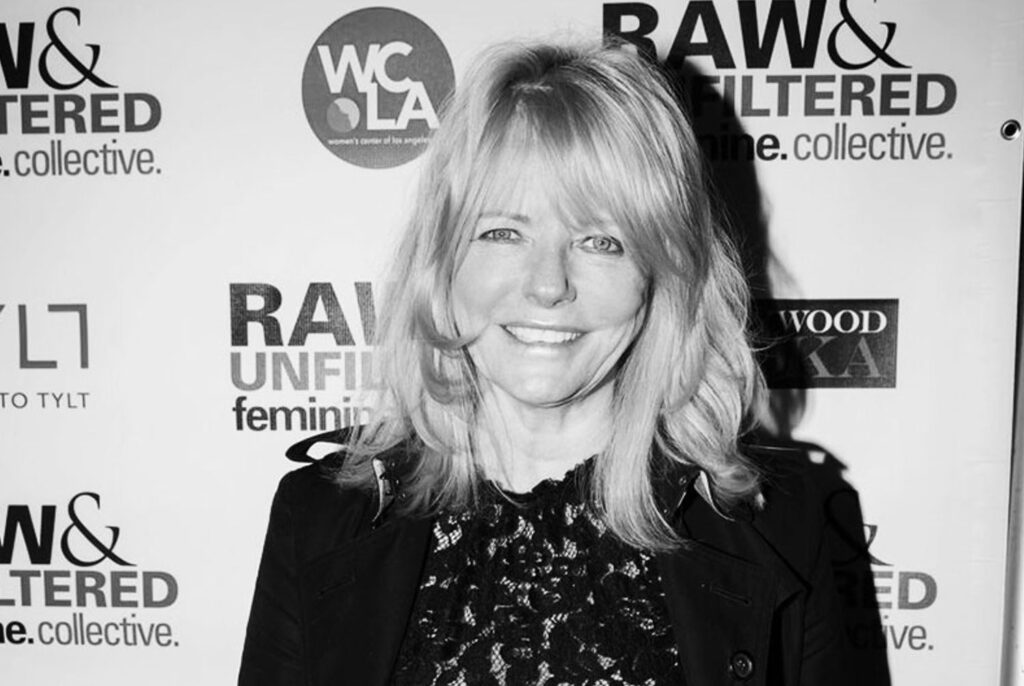
I’m Fabulous (According to Supermodel Cheryl Tiegs)
When Cheryl Tiegs – yes, supermodel Cheryl Tiegs — gave me a hug and said that I looked fabulous in my new dress and polished makeup, well, that was something I never could have dreamed of as a trans kid spending their life hiding as a boy.
I also couldn’t have imagined that I would be at a big Hollywood affair being thrown for me and my fellow authors. I felt accomplished, respected, and appreciated. Ms. Tiegs and many others directed some very affirming words towards me as the editors introduced me around the swank room, singing my praise.
The following day, my friend Nicole watched me handle Marika’s newborn with precision and adeptness that comes from a deep maternal instinct, and she was impressed. “You would make a better mother than me,” she proclaimed as we giggled.
How grateful I was to receive all that affirmation over what is an awesome life.
And how quickly it was that I erased all of it.
I have so much resistance to believing that the life of a woman — let alone a charming, attractive and accomplished woman — is possible for me.
Instead, I let my ego play out the old tapes that kept me small and hidden as a boy, working to convince me that I was a loser, that any accomplishments were just temporary flukes.
Not even a few days later, the whiplash from my ego returned in full force, demanding that I stay stuck, stay safe and comfortable so I wouldn’t have to be outed as the big, fake loser I am.
Fueled by fears I honed and refined in learning to resist the possibilities of a queer life, my ego grew to a giant size early. My socialization and training as a boy taught me I had to deny my dreams, my corrupt, perverted dreams.
Early on I learned that “No, boys don’t wear dresses,” and “No, boys don’t wear makeup,” so after what felt like a millions times of hearing that, I began to believe my heart — my tender feminine heart — was something to fear and ignore if I were to succeed and function in this world.
Since then, I have taken giant steps towards honoring my heart, granting her the freedom to say, express, and own what she felt and truly desired by transitioning my gender presentation and owning my transgender history. Coming out as a transgender woman wasn’t easy. It took a lot of work, discipline, and self-awareness, a lot of moving beyond blocks in order to get to where I am, but even now, that resistance still can cripple me in an instant.
Transgender women are some of the most skilled at resisting change in their lives. Whether it means resisting positive choices, letting go of old defenses, or embracing new challenges in their hard fought gender, resisting is still the common theme amongst our community. We are shaped much more by our defenses, by how we have learned to deny, than by our possibilities.
My life is no exception. I let my ego talk trash to me as it works to convince me that I am just not worthy of any compliment from a glamorous Hollywood star. My accomplishments are meaningless. When I believed that, my ego had won again.
I’ve always had numerous accomplishments in everything I did. I seem to have talent, a knack for figuring things out. A glow people have pointed out that resonates like a beacon, allowing strangers to approach me and confide in me what they fear to tell their closest friends and family. I have talents for sure.
But when the lights fade, and I’m all by myself, that’s when my demons are the strongest and their loudest. My ego leads these troops into a battle to convince me to resist believing the evidence of my life, warning me to stay small, to go back to old patterns that kept me safe but didn’t do me any good in the long run. The troops then loudly proclaim that ships in the harbor are safe; why venture out to the unknown and face possible shipwrecks?
I have a moment, between stimulus and response, where I could step in and move beyond those habitual fears to give my tender feminine heart — the one that was locked away as sick for so many decades — a token of my wisdom, a confident affirmation through a tender gesture that I don’t need to play small and go back to the strait-jacket life of my past. That being magnificent is okay. In fact, it is more than okay. I run most efficient when my boilers are up to maximum core temperature, when I’m running hot and wowing myself. I thrive and find beauty in everything in those moments, and seem to have no limit to my connection to the eternal. I am in the zone when I allow myself to be free of the shackles my ego makes me wear, and the precision and beauty I can concoct during those segments of life are — and have been — beautiful.
These days I am much more aware when my ego flares up and calls in the troops for backup. I am quicker to notice when it berates me and sounds off on the microphone. During those times, I remind myself that there are nights like the night of January 28, 2016 when Cheryl Tiegs complimented me and gave me a hug; where Nicole affirmed my womanhood through caretaking; and so many more I have lost count.
It’s time to own them and revisit them, so the ammunition to quiet my ego is ready and available.
Because in the end, like Ms. Tiegs warmly affirmed to me, I am fabulous.

Getting Into the Flow
I know how to chase my tail, how to let my ego spin me into a tizzy. I know how to let my ego convince me that I was no good and that to survive, I needed to suppress my womanhood. I learned how to do that early.
These days, though, I also know how to be in the flow, to be present, to show discipline, so I can receive the blessings that come from my receptivity to my feminine heart.
From being tossed by the choppy seas of denial to getting in the flow has taken a good five years, marked by important milestones. I was grateful to go back and revisit two scenes from my days of denial, which let me feel the beauty of being in my flow.
The first milestone came when I went dancing at Das Bunker, a gothic club. Five years ago, I often danced there while I wore a wig, scared to grow out my hair in case people close to me suspected I was queer. I confined my queerness by using all my energy to deny my feminine heart. The shiny and superficial attracted me then, reflecting the mask I wore, as I looked for someone attractive to give me a thrill before the dawn broke, and I had to scrub my face, take off my wig, and continue to convince everyone I was as manly as the day was long.
When I returned to Das Bunker for the first time since those days, all that posturing, that choppy squeeze, was gone. Like other women, I wanted to set myself free, letting go of the corporate face I wore during the workweek. My inner emotional cadence dictated how I swayed my body on the dance floor, reminding me to focus on the music.
How far I’ve come in the last five years! To think I was so scared of coming out to my friends or being discovered by my family, that I used to go to Das Bunker to discharge my potential, searching to blow out the energy inside me so I would return numb and deflated when I got back to my life of denial.
Investing toward building a good life, toward seizing opportunities for growth and integration forced me to make changes I could only see looking back. Here I was at Das Bunker five years later, owning my womanhood and confidence in ways I never imagined I could do during those bleak times when I only allowed my feminine heart a few hours of exposure per weekend.
By the time my friends and I left the club at 2 a.m., my rebirth was triumphantly affirmed. An emotional reboot had taken place, and I didn’t need to turn to old knee-jerk reactions to smash down my flowing emotions. There was no crazy driving and venting my aggression on the freeways or in other unhealthy ways.
My pride didn’t have to be washed away with the makeup at the end of the night; rather, I could stay in the glow even into the sunlight of the following morning. The volume of affirmations I received at the club were revelatory. All the work I had put in allowed me to get to where I am today. The writing, the therapy, the long hours of consulting with my life coach on the east coast; so many blessings—ranging from situations where I reflected upon my milestones to meeting shamans at the right place at the right time —were necessary and had to take place for me to finally hear the lessons and integrate my wisdom into real growth. What an incredible and long road I have taken, one step at a time. It is something to hold me through my next steps.
People often say “when the student is ready the master will appear,” but what is often omitted is that even once the student is ready and we hear the wisdom from our master, we still have to do the work to own and integrate the knowledge around us. Everyone heals in their own time, and their way and that process are often bruising, where the fruits are revealed only when we look back and celebrate the person we have become, the beauty we show today.
Sure, we can speed up the process by staying present and alert to the lessons and gifts we receive, but the work still has to be done, and no one else can do it for us.
For the work, I have done to get me out of choppy waters and more into the flow, I was proud.
Then I was gifted a second milestone at Sharpshooter’s—a shooting range—where five years ago, my transgender friend Mika presented as a woman while I dressed as a guy. I was so jealous that she had the grace to go anywhere while presenting as a woman. I lacked her courage. I just didn’t think it was ever going to be possible for me to go to venues in broad daylight that were so male dominant.
This time, I was back, and I went in there without batting an eyelash, except to one of the cute boys who was two lanes over to the left of ours.
My friend Jean owned a revolver, and she let me go first. After firing several rounds, I noticed a drastic difference in my approach towards her firearm, towards how I had been treating everything in my life as of late. How we do one thing is how we do everything, and my approach has, over the past five years, gone from a steady dose of posturing and running away from my feelings, to a now more receptive and feminine mindset, as I appreciated being present and allowed myself to feel the emotions involved at the moment without thinking too far ahead or trying to show off that I could do things better than those around me.
And even though I shot well and put the majority of my shots in a small groove, I was giggly, radiant, and relaxed for reasons that came from my heart expressing itself authentically, and not from my ego posturing an identity cast on a mask to hide my femininity. I didn’t let my ego take over and infiltrate my behavior to demand an even better performance. I instead stayed in the flow, reminding myself that I was there to have fun, to enjoy an afternoon with a girlfriend, and to not worry so much about winning or being competitive. It reminded me of how, just like at Das Bunker the night before, I had adopted the same approach in other areas of my life, like when I was at the park shooting hoops. I had entered the flow in multiple areas of my life, and it was all because I was coming from my heart and not from my old socialized patterns and boyish upbringing.
I even left the shooting range welcoming the possibility of purchasing a revolver, something that I would have never contemplated in the past, because for so many years, I wanted a handgun that could hold the most rounds and looked the coolest. But the mindset of wanting the coolest and biggest phallic firearm was dropped, with my mindset, instead shifted to the focus on something practical for self-defense, something that felt good when I shot it with my gal pals.
The following morning, when I was getting ready for work, I recalled the dream I had the night before; a dream that my subconscious used to consolidate my growth:
My therapist from 2011 was sitting on a stool, and we were at a café, sharing a casual chat. She told me she could see how far I’ve come as a transgender woman, and how proud of me she was. I told her that it took a lot of work in getting over my damn self and opening up my mind to the different choices I had to make, even though it meant letting go of my old defenses.
Then my father appeared out of nowhere, and he told me he was having trouble making a faculty decision for the university that he’s teaching at. I told him that regardless of if his decision was right or wrong, that the key was to make one anyway, because staying inactive with fear would result in a worse outcome. He thanked me and patted me on the head…
As grueling as my gender transition has been — where I had to navigate choppy seas on a daily basis — I couldn’t help but smile at the journey I undertook, as it made being in the flow feel that much sweeter, topped off with my dream that validated everything that I had worked for during the past five years.
Toga of Enchantment
When a group of girls begin dressing each other in a public bathroom with strips of jersey fabric to form togas for an art show, it can lead to feelings of discomfort and insecurity about a person’s body image…
Surrounded by four gorgeous blonde girls who looked like models, and I began to question if I belonged, welcomed in the group. Or was I was a fraud that somehow got a backstage pass into the women’s restroom despite being a woman.
As we wrapped white pieces of fabric around our bodies to form matching togas, all four of the gals next to me morphed into goddesses. I felt like I didn’t belong there because of my ego, because of that sly inner critic that slid itself inside my head and voiced its opinion about the invalidity of my womanhood. I was a fraudulent card carrying member because I also carried a penis between my legs.
Despite being among five friends who completely accept me for who I am and see my heart over my biology, it was my self-criticism that was the harshest witness of all.
“You look great, you have nothing to worry about,” said Lauren.
As much as I wanted to believe Lauren, I couldn’t silence the voice that kept saying that Lauren was wrong, that my self-criticism was right. I couldn’t shed the insecurity surrounding me.
“These women are biologically female, and you’re an impostor,” my ego said.
My inner critic continued to jab me with its bloody and familiar bayonet while I tried to center myself and breathe in that muggy restroom. Toni began putting the white fabric around my body and wrapping me up with the toga to look like a Greek goddess, I started to relax and affirm to myself that I belonged right where I was.
So many transgender women can’t get over that initial criticism, that initial self-doubt, and in the process, they choose to avoid a challenging situation altogether, letting go of all the possible glory that awaits them. Without taking any chances, they receive no gifts in return. One must play to have the possibility of accruing wins.
There’s an inherent danger when we hold onto the binary of man or woman only, concluding that nothing else exists in between. I was accepted and seen as one of the women. On the other hand, they all knew my history well.
They knew and didn’t know, they cared and didn’t care. It was fine.
When do I remember to tell myself that? When do transgender women remember to affirm themselves in moments of doubt when they are in situations that require exposing themselves: getting naked and facing their fears?
How do we affirm ourselves when the trans-panic button is being pushed?
How do we stay calm in front of friends, family, and loved ones, when they see our externals but can’t even fathom how our insides are churning.? When we feel completely isolated and alone on our individual journey, our own path with no Sherpas to help us navigate through the choppy waters of re-gendering ourselves, claiming our new ways of taking power in the world?
I look back to all the times I faced adversity as a transgender woman since I presented in 2011. I can say that repetition through exposure has helped. But what else can we harness to help ourselves stay centered in the face of adversity?
I think listening is a huge key for us to allow ourselves to hear our inner critic. Upon being able to hear our ego flair up with self-criticism and labeling ourselves as fraudulent women, we can then begin to apply the tools of our practice to affirm ourselves when we want to hide and run.
Those tools are honed through countless lessons where we face challenges, receive affirmations, and on occasion, get a glimpse of something completely unexpected, something we didn’t even know we needed. Divine surprises are what keep us immersed in the river of life, willing to bear the brunt of the cold and turbulent waters, in anticipation for one more surprise that is waiting for us.
We need to choose to listen to and live from our hearts.
Sometimes, well, all we get is a nice white toga to make us look like a goddess, even if it’s just for one enchanting evening among our girlfriends.
Releasing Her Ego Changed Her Life
I used to be such a planner. Everything had to run on time, in an endless conveyor belt type manner. I would get restless when people took too long in line at the grocery store, or anywhere for that matter.
I was a hamster that constantly spun her wheels, going nowhere quickly.
Then I began listening, paying attention to when I was happiest, in flow, jiving, and joyous.
I realized through much hard work and guidance from gurus that I was letting my ego do so much of the leading, exhausting myself in the process.
I began to appreciate people who could be in their spiritual zone, marching at their pace, without a care in the world for the phallic and posturing masculine-centric pace set by society.
I was in that exact flow space recently, when I visited my friend Ashley, who I met at Esalen last summer.
She was staying with another older woman, Sydney, who was house-sitting at a luxurious beach-front property in Santa Monica.
As soon as I entered, I was introduced to the third gal, Emma. I began to relax around their warm and inviting energy, and just let the evening unfold on its own accord. I let the unfurling take place organically, relinquishing control, and letting myself ease into whatever needed to happen.
I had just driven 40 miles through Friday evening traffic in Los Angeles leaving the technical world of my job involving crunching numbers and performing calculations on airplane wing structures. I was fried mentally, physically, and emotionally from a long week.
Typically, I would require at least 30 minutes or so to decompress and come into my own. But I immediately felt the radiance of all three women. They were in the kitchen offering me an organic rice cake with pumpkin seed butter and hot tea.
With my physical needs taken care of, they resumed their sketching on a big art binder with an assortment of pastels and pens.
“Join us and make magic. Add some of you to this,” said the elder Sydney.
I started off gingerly at first, sketching in the corner with a Sharpie pen, and smearing greens with browns with my finger onto the paper. The kinesthetic feel of my fingers rubbing the pastels into the weighted paper felt amazing, and created a spark, a connection with what we were doing. I was fully present and feeling nourished physically from the rice cake and emotionally from the artwork. As we drew and sketched, the dialog that ensued was incredibly nurturing, yummy for my soul.
We discussed connection, receptivity, presence, mindfulness, gratitude, surrender, many of the same topics that so many gurus have helped me work towards the past few years. I was ready that night, able to hear the universe calling.
These women transported me into a very relaxing, comforting, and safe-feeling space. I began to open up and share, naturally telling them about my transgender history, my journey into womanhood, the work I’ve done to become self-aware. I shared in the fact that I enjoy writing, and read them a touching piece that I wrote about my parents.
Ashley said she wished she had my parents growing up. I began tearing up, and we hugged.
The rest of the gals reciprocated by sharing their art. Culminating with Sydney performing in front of us several art pieces she had drawn and narrated with poetry. She formed a story told with such passion and emotional outpour that it made me feel like I just witnessed a condensed theatrical play in seven minutes.
We were all on the same wavelength, sharing and bonding, and contributing towards an art piece whose final destination was still unknown, changing with each passing minute with the whims of our morphing emotions.
The connection, the frequency of the wave that the four of us simultaneously shared was amazing. It was as if each of us magnified the amplitude of our collective presence, supplying our individual stories and respective energies to the whole of our group. Resonating together in one, mimicking the drawing that was coming together with the four of us contributing random strokes, forming a collaborative piece of beauty by riding the same wave of creative outlet.
What a blessing, to be a part of something so special, so vibrant, so healing, so loving.
And I owe it all to being in tune with my spiritual whimsy, my spontaneity, my ability to finally let go and be in a spiritual space, in touch with my feminine heart and energy. This connection with myself added to the core group. I was able to reap an evening full of powerful gems to propel me forward in my journey … a journey that I have since realized becomes more vibrant with the more play, dance, and freedom I give it. Reflecting with accurate symbology from the artwork we created with no plan in sight, cascading as it may to where my Mother in the Sky guides me.
The Butterfly Effect
I took a Method Writing class with the well-known Jack Grapes last fall, and I noticed a deep parallel with one of Jack’s writing techniques—called transformation lines—when I look at my life.
He encourages us to use our transformation lines to go deeper, to find our voice, our narrative. I know I’m still new to this writing technique, but I feel quite comfortable going deep. And I know why I feel comfortable.
Transgender people have to risk being visible. We have no other choice.
In order for me to survive every day, I choose not to parry myself back, instead showing the world who I am. I make my choices to be aligned with my inner self, visible every day. I might as well be a piece of live political activism walking around, personified and interacting with others on a deep level.
Many people I encounter who aren’t ready yet, don’t want to engage. Even if I’m very nice to strangers and coworkers, sometimes people find me just too queer for the room. I bring up their shit, and they don’t want to deal with it. Instead, they blame me for bringing up their shit.
It’s different for me, though. I have always been a seeker. I revel in it. From as young as I can remember, I liked the idea of treasure maps. It wasn’t only because I was inspired by the hit 80s movie Goonies. Sure that played a part in it, but I knew something deep inside my bones was rattled the day I saw that movie, jostling me awake, into action.
But I didn’t want to look for physical riches or treasures. I never wanted to explore money in that way. Never had an interest in it. I even recall my mom taking me to the bank when I was a kid, and I asked her why people couldn’t just get along and help each other for nothing. She rolled her eyes and told me “You will get it when you get older.”
Thirty-one years later and I still don’t, but whatever, to each her own.
Regardless, I’ve always liked seeking. I want and like to get to the bottom of things. I like finding answers, but I cherish the questions that are generated by the answers even more.
The questions to me are like finding the reason the treasure exists in the first place and getting back to the source of my spiritual core. Fuck the treasure. Why the treasure is even there to begin with is more important to me. That’s what’s really shiny for me.
I probably would have been just as determined as a seeker had I not been born transgender, but either way, seeking and teasing out what’s in the question always intrigues me.
And that’s the point.
I find the transformation line an intuitive way to organically probe, seek, and let things cascade as they may. There is such inherent beauty in doing so, if we can get over our damn selves, that bear in the closet, that inner critic who fools us into thinking we are better off not betting on tomorrow.
Fuck that. I want to bet on tomorrow.
And I’m willing to bet that most everyone regrets not taking the chances we had than the ones we took.
I still giggle at the notion now, in retrospect, when I called a girlfriend for reassurance because I felt so nervous attending the first Tuesday of Jack’s class. My friend reassured me with her well-timed humor: “What’s the worst that can happen, Natalie? He doesn’t like your writing and breaks your fucking laptop over his knee.”
“That would be bad,” I said. “Fortunately, I don’t bring my laptop,” I added, laughing without being able to stop.
Betting on tomorrow is all we have as humans. I always think about our explorations as humans. Whether we go into space, into uncharted territory, or have a picnic at the park, we bring our inner tool bag of wisdom and pack extra supplies to bet on tomorrow.
We spend our whole lives planning, even while we are intense and present in the moment. There is beauty in taking those chances, in exploring what’s scary and unknown while maintaining a presence of mind.
I found it incredibly difficult to let go of my old persona, my old gender identity, and presentation. I fought letting it go for 31 years. I didn’t strive to keep my old identity in tact; I fought letting it go.
I made choices in trying to avoid loss by holding on instead of going towards what I wanted. I let myself go into unknown territory, encompassing my goals, my desires, my heart.
For so long, I made mistakes and held onto the shame of making them instead of being grateful for the inherent lessons made available by the universe where I stumbled. I kept that burden far too long, the burden of judgment in labeling my actions not being right the first time, the burden of letting down my parents, my friends, myself, all the while crucifying myself for not being perfect. I let who I was, not dictate my identity instead of acknowledging who I was inside.
I became scared to bet on tomorrow.
As time went on, I became even more afraid to make further mistakes. I thought it would be easier to let myself survive under the radar, undetected and hidden. I planned to coast through life doing as little as possible, to play small, to modulate myself, to not be too queer for the room.
“People wouldn’t get the joke anyway,” I rationalized to myself. “It’s no loss on your part if no one hears or sees you anyway,” I said to myself. “If no one is there to affirm the real me, do I really exist? Just like the tree falling in the forest, if no one is around, I guess it doesn’t really fucking matter then.”
For so long, far too long, I believed that about myself. I believed the bullshit rationalization about myself, about staying small and disconnected from the world. That my gifts were meaningless and unworthy of being shared with the person next to me.
But a seeker has to be who they are. We can’t fight our hearts. Just like I couldn’t suppress and suffocate myself my entire life — I eventually had to show my feminine heart to the world — likewise, I had to show my seeking prowess to the world as well. How we do one thing is how we do everything. My innate desire to seek brought me so many adventures, lessons, heartaches, and joys, and through it all I burned through the shame and stigma of my transgender nature, and I decided to show my feminine heart, align with my innermost self.
My seeking rekindled my life, so now, in addition to the blessings and challenges resulting from crossing the hetero-normative gender boundaries, I now just merely seek the next transformation line, both in my writing and in my life by betting on tomorrow.